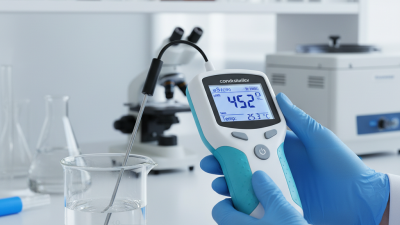
Clean water testing often begins with a small handheld probe, not a complicated laboratory system. A conductivity meter for water testing measures how easily water carries an electrical current. This response mainly reflects dissolved ions, including salts, minerals, and some industrial residues. The United States Geological Survey identifies specific conductance as a practical field indicator of dissolved material in water. It is useful beside a treatment tank, a private well, or a sampling bottle.
The need is substantial. The WHO and UNICEF Joint Monitoring Programme reported that 2.2 billion people lacked safely managed drinking water in 2022. Conductivity cannot prove that water is safe to drink. However, it can reveal sudden changes that deserve investigation. A rising reading near a membrane system may suggest salt passage or poor treatment performance. A stable reading does not remove every risk.
Good measurement requires more than pressing a button. APHA’s Standard Methods, including Method 2510 B, supports conductivity testing with controlled procedures and temperature awareness. The U.S. EPA also notes that conductivity may help estimate total dissolved solids, although the relationship depends on local water chemistry. That limitation matters. A meter can be accurate and still answer only one question.
In practice, users should rinse the probe, avoid trapped air bubbles, and wait for a stable value. Temperature compensation should be checked before comparing results. Calibration records strengthen confidence. Yet field work is rarely perfect. Dirty sensors, poor sampling, or an unsuitable range can distort the reading. Treat conductivity as an early warning signal, then confirm unusual results with laboratory analysis and other water-quality tests.
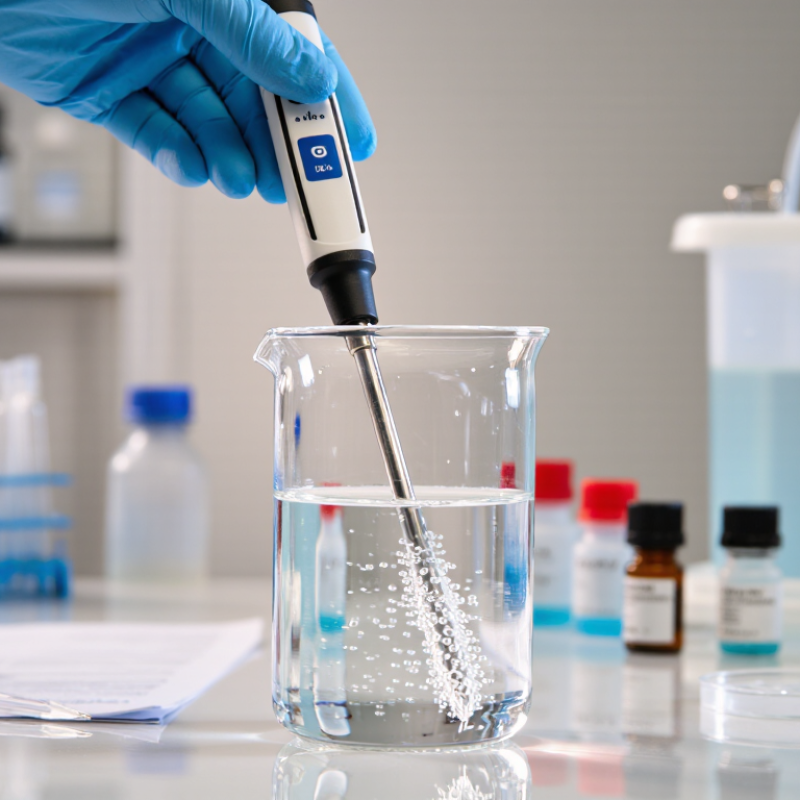
A conductivity meter for water testing measures how easily water carries an electrical current. Dissolved ions, such as chloride, calcium, and sodium, increase conductivity. Pure water conducts poorly. Mineral-rich water usually produces a higher reading.
The United States Environmental Protection Agency lists 500 mg/L as a secondary guideline for total dissolved solids, not conductivity itself. Conductivity can help estimate dissolved solids, but the conversion depends on the water’s chemical profile. The United States Geological Survey explains that specific conductance is useful for tracking changes in dissolved material during field monitoring. It is an indicator, not a complete safety test. A reading may rise after road salt enters a stream, or fall after dilution from rainfall. Numbers need context. This is where testing becomes less certain.
Tips: Calibrate the meter before use. Rinse the probe with clean water. Test the sample near room temperature, because conductivity changes with temperature. Record the temperature, location, and time beside every result. Compare repeated readings, rather than trusting one measurement. If the value changes sharply, check the sample container and probe for contamination. Small errors happen, even during careful work. The World Health Organization does not provide a universal health-based conductivity limit for drinking water, so conductivity should be combined with microbiological and chemical analyses.
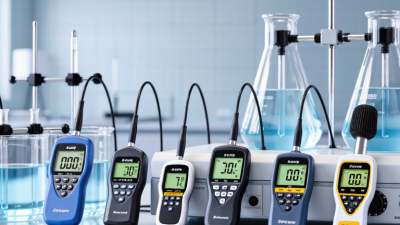
A conductivity meter for water testing measures how easily an electrical current travels through water. Dissolved ions, such as salts, minerals, and acids, carry this current. Pure water conducts weakly, while water with more dissolved ions usually shows higher conductivity.
Inside the probe, two electrodes contact the sample. The meter applies a small alternating voltage, then measures the resulting current. It calculates conductance from this relationship and converts the reading into conductivity using the cell constant. Temperature matters greatly. Warmer water often conducts better, so reliable meters use temperature compensation. In field testing, I let the probe settle in the sample and rinse it between measurements. Small bubbles can distort the reading. They are easy to overlook.
Tips: Calibrate with a suitable reference solution before testing. Match the calibration range to the sample. Keep the probe clean, but avoid aggressive scrubbing. Record temperature with every result. Conductivity can suggest dissolved-ion changes, but it cannot identify each substance. A high reading does not automatically mean unsafe water. That assumption needs further testing. Calibration may also drift, especially after repeated outdoor use. Rechecking an unexpected result is sensible.
| Data Dimension | Description or Typical Value | Why It Matters in Water Testing |
|---|---|---|
| What the instrument measures | Electrical conductance of a water sample, commonly reported as conductivity. | It provides an indirect indication of the concentration of dissolved ions in the water. |
| Basic measuring principle | The meter applies a small alternating electrical signal between electrodes and measures the resulting current. | Alternating current helps reduce electrode polarization and supports stable readings. |
| Relationship between conductance and resistance | Conductance is the reciprocal of resistance: G = 1/R. | A solution that carries current easily has higher conductance and generally higher conductivity. |
| Conductivity calculation | Conductivity is calculated from measured conductance and the cell constant: κ = G × K. | The cell constant accounts for the geometry and spacing of the sensor electrodes. |
| Common conductivity units | µS/cm (microsiemens per centimeter) and mS/cm (millisiemens per centimeter); 1 mS/cm = 1,000 µS/cm. | The correct unit makes low-conductivity and high-conductivity water easier to compare. |
| Typical temperature reference | 25°C is a commonly used reference temperature for reporting temperature-compensated conductivity. | Conductivity changes with temperature, so readings should be compared at the same reference temperature. |
| Temperature effect | For many dilute water solutions, conductivity increases by approximately 2% per °C, although the exact value depends on the solution. | Automatic temperature compensation improves consistency when sample temperatures vary. |
| Ultrapure water | Approximately 0.055 µS/cm at 25°C under ideal theoretical conditions. | Real laboratory water is usually higher because carbon dioxide, containers, and contamination add ions. |
| Distilled or deionized water | Often below approximately 10 µS/cm when freshly produced and properly stored; actual values vary widely. | A rise in conductivity can indicate ion contamination or contact with air and storage materials. |
| Drinking water | Commonly about 50–1,500 µS/cm, depending on geology, treatment, and dissolved mineral content. | Conductivity is useful for tracking changes in mineral content, blending, and treatment performance. |
| Fresh surface water | Frequently about 50–1,000 µS/cm, with significant seasonal and geographic variation. | Unexpected increases may suggest runoff, salinity intrusion, or other dissolved-ion inputs. |
| Seawater | Approximately 40–60 mS/cm, depending mainly on temperature and salinity. | High conductivity reflects the substantial concentration of dissolved salts. |
| Total dissolved solids relationship | TDS estimates are often calculated from conductivity using a conversion factor commonly ranging from about 0.5 to 0.9. | The estimate is approximate because different ions have different electrical conductivities. |
| Common sensor types | Two-electrode cells are common for general measurements; four-electrode or inductive sensors are used for specialized ranges and samples. | Sensor design affects measurement range, polarization behavior, fouling resistance, and suitability for concentrated solutions. |
| Calibration standard | Potassium chloride solutions are widely used because their conductivity values are well characterized. | Calibration verifies the cell constant and helps compensate for sensor and instrument variation. |
| Recommended sample handling | Rinse the probe with sample or suitable clean water, remove air bubbles, immerse the sensor correctly, and wait for a stable reading. | Clean and repeatable handling reduces contamination, trapped-air errors, and unstable results. |
| What conductivity does not identify | It does not identify individual ions or directly measure biological contaminants, organic compounds, or specific pollutants. | Additional analytical methods are required when the identity or concentration of a particular substance is needed. |
| Typical applications | Water purification checks, boiler and cooling-water monitoring, aquaculture, hydroponics, environmental surveys, and laboratory water control. | The measurement is rapid, portable, and useful for detecting changes in dissolved ionic content. |
A conductivity meter measures how easily water carries an electrical current. Dissolved ions make this movement possible. Salts, minerals, acids, and bases can all increase conductivity. In practical water testing, the reading offers a quick view of ionic content, salinity, and possible total dissolved solids. A sudden rise may indicate runoff, chemical carryover, seawater intrusion, or changes in a treatment process. A stable reading can support process control, but it does not prove that water is safe. Conductivity shows change, not identity. That distinction matters.
A high reading does not automatically mean harmful contamination. Likewise, very low conductivity does not confirm perfect quality. The meter cannot identify individual substances, and it does not directly measure bacteria, many organic pollutants, turbidity, or pH. Testing is stronger when conductivity results are compared with laboratory analysis and site history. Temperature also affects readings, so automatic compensation or careful temperature records are important. Small details count.
Before sampling, rinse the probe with clean water and inspect it for deposits. Keep the sensor fully immersed without touching the container. I have seen air bubbles create unstable values during field checks. It is an easy mistake. Record the sample location, time, temperature, and result. Trends often reveal more than one measurement. Still, trends can mislead when calibration is overdue or the sample is poorly mixed. A conductivity meter is useful evidence, not a complete verdict.
A conductivity meter measures how easily water carries an electrical current. Dissolved ions, such as salts and minerals, increase conductivity. Pure water conducts poorly, while contaminated or mineral-rich water often produces higher readings. The instrument usually includes a conductivity probe, temperature sensor, electronic circuit, display, and calibration controls. The probe contacts the sample through metal electrodes. The temperature sensor helps correct readings because conductivity changes with temperature. Small details matter. A dirty probe can create unstable or misleading results.
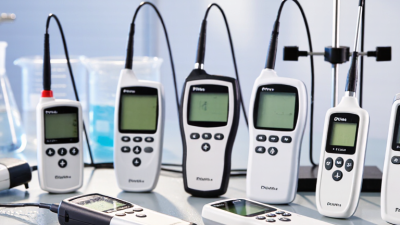
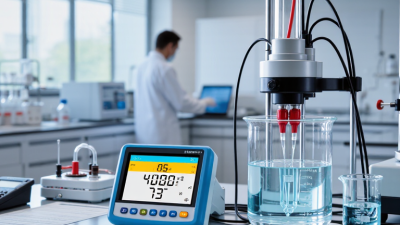
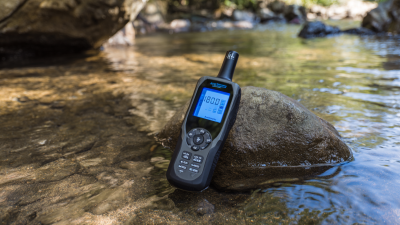
Water conductivity meters come in several practical forms. Handheld meters suit field checks near tanks, pipes, and natural water sources. Benchtop meters provide more control for laboratories and routine quality testing. Inline meters remain installed in a water system and monitor changes continuously. Meters also differ by measuring range, probe design, and temperature compensation method. Contacting probes are common for ordinary water testing. Inductive sensors can work better in harsher liquids because their electrodes do not directly touch the sample.
Reliable testing requires a clean container, adequate sample volume, and careful calibration with a suitable standard solution. Rinse the probe between samples, but avoid wiping its sensing surface harshly. Record temperature with each result. A reading may look precise yet still be wrong. In practice, bubbles, residue, poor calibration, or uneven mixing can affect the value. I have found that repeating an unusual result is often wiser than trusting one perfect-looking number.
What Is a Conductivity Meter for Water Testing?
A conductivity meter measures water’s ability to carry electrical current. Dissolved ions, including salts and minerals, increase the reading. Results are usually shown in microsiemens per centimeter (µS/cm). The USGS Water Science School reports typical drinking water conductivity near 50–800 µS/cm. Seawater can reach about 50,000 µS/cm. These values are useful references, not universal safety limits. The WHO Guidelines for Drinking-water Quality do not set a health-based conductivity limit.
How to Use, Calibrate, and Maintain a Conductivity Meter
Rinse the probe with clean water before testing. Avoid touching the sensing surfaces. Collect a representative sample in a clean container. Immerse the probe fully, then wait for the reading to stabilize. Record temperature and conductivity together. Temperature matters. A 25°C reading may differ greatly from the same sample at 10°C.
Calibrate the meter with a certified conductivity standard near the expected sample range. Follow the instrument’s stated cell constant and temperature-compensation settings. EPA Method 120.1 and Standard Methods 2510 B both emphasize controlled calibration and temperature measurement. Use fresh standards. Never pour used solution back into the bottle.
After testing, rinse the probe and inspect it for mineral deposits. Store it according to the manufacturer’s instructions, not in random tap water. A practical warning: a rushed rinse can create a convincing but false result. Even experienced technicians should repeat unusual readings. Calibration drift happens, and ignoring it is an avoidable weakness.
Electrical conductivity indicates how easily water carries an electric current. It is mainly influenced by dissolved ions such as salts, minerals, acids, and bases. The representative values below are measured or commonly reported at approximately 25°C and may vary with source and temperature.
A conductivity meter applies a small electrical signal through a probe and reports conductivity in microsiemens per centimeter (µS/cm). Before testing, calibrate the meter with a certified standard, rinse the probe with clean water, immerse it fully, wait for a stable reading, and rinse and store the probe according to its instructions. Temperature compensation is important because conductivity changes as water temperature changes.