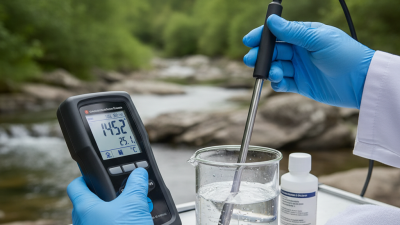
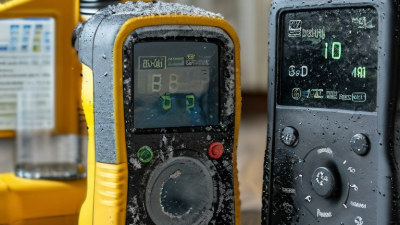
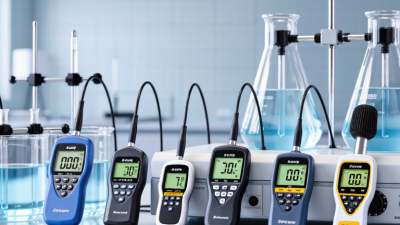
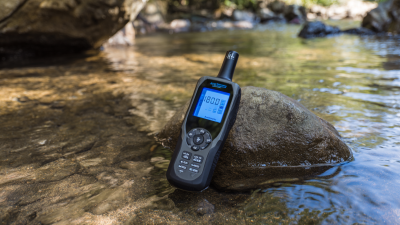
A portable conductivity meter is a compact instrument used to estimate how easily a liquid carries electrical current. It is common in water treatment, hydroponics, laboratories, aquaculture, and industrial process checks. Unlike a fixed laboratory system, this handheld device can travel from a storage tank to a sampling point within minutes. It usually includes a display, control buttons, a probe, and a protective case.
The working principle is straightforward. Two electrodes in the probe contact the liquid and apply a small electrical signal. Dissolved ions, such as salts, minerals, and acids, allow current to pass between them. The instrument measures that response and converts it into conductivity, often reported in microsiemens per centimeter or millisiemens per centimeter. Many models also measure temperature because conductivity changes as liquid temperature changes. Temperature compensation helps produce more consistent readings, but it does not correct every possible error.
Small details matter. A dirty probe can create an unstable value. Air bubbles may cling to the sensor. Poor calibration can mislead an experienced operator. No meter is infallible. Before trusting a result, users should rinse the probe, remove visible bubbles, and check it with a certified standard solution. The sample container also needs attention; residue from detergent or fertilizer can distort the measurement. This guide explains the main components, measurement process, calibration habits, and practical limitations of a portable conductivity meter, while recognizing that field conditions are rarely as controlled as a laboratory bench.
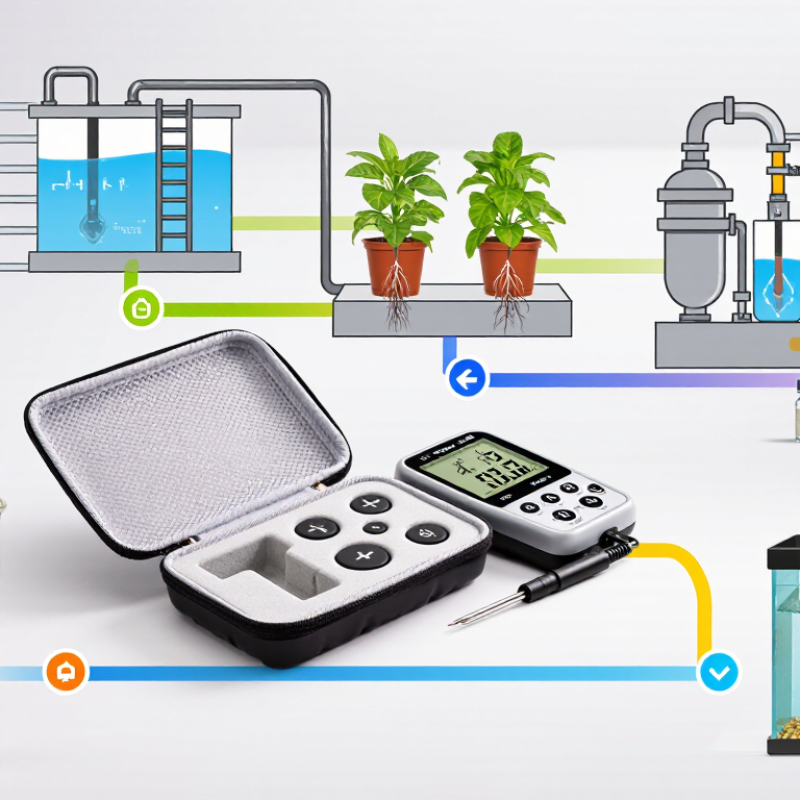
What Is a Portable Conductivity Meter and How Does It Work?
Portable Conductivity Meter: Definition and Core Measurement Purpose
A portable conductivity meter is a handheld instrument for measuring how easily water carries electrical current. It uses two electrodes, applies a small alternating signal, and records the resulting conductance. The meter then converts that reading into conductivity, usually reported in µS/cm or mS/cm. Temperature compensation is essential because warmer water conducts electricity more efficiently. Without it, field results can look falsely high.
Its core purpose is screening dissolved ionic content, not identifying every substance. The USGS National Field Manual describes specific conductance as a useful indicator of dissolved minerals in natural water. It also reports that distilled water may measure about 0.5–3 µS/cm, while many streams show much higher values. EPA Method 120.1 and ASTM D1125 provide established procedures for conductivity measurement. These methods support reliable comparisons when calibration and sampling conditions remain consistent. Still, conductivity cannot distinguish chloride from nitrate. That limitation is easy to overlook.
Tips: Rinse the probe with sample water before testing. Remove trapped bubbles. Wait for a stable reading. Calibrate with a suitable standard near the expected range. Record temperature, location, and time. A dirty cell can quietly distort results. I would also question unusually perfect readings; field water is rarely perfectly stable. For high-salinity samples, confirm the meter’s range and cell constant before trusting the number.
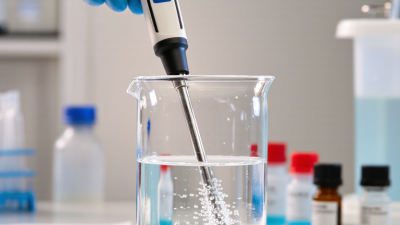
A portable conductivity meter measures how easily an aqueous solution carries electrical current. Conductivity mainly reflects the concentration of dissolved ions and is commonly reported in microsiemens per centimeter (µS/cm) at 25°C.
Representative conductivity values at 25°C. Actual readings vary with temperature, mineral content, contamination, and sample conditions.
A portable conductivity meter measures how easily water carries an electrical current. Its key component is the probe, usually fitted with two or four electrodes. The meter applies a small alternating signal and detects the resulting conductance. A processor converts that response into conductivity, commonly shown in µS/cm or mS/cm. Many probes also include a temperature sensor. This matters because conductivity changes with temperature, often by about 2% per degree Celsius in natural water. The USGS National Field Manual for the Collection of Water-Quality Data recommends recording temperature and applying compensation during field measurements.
Inside the meter, the circuit board manages signal control, calculation, calibration, and display. A rechargeable battery supports sampling beside tanks, pipes, or streams. Some models store readings with time and location data. The EPA’s Secondary Drinking Water Regulations list 500 mg/L as a recommended limit for total dissolved solids, although conductivity cannot replace a laboratory TDS test. The relationship depends on dissolved ions. It is not perfectly fixed.
Before use, I rinse the probe, remove trapped bubbles, and check a certified standard. A clean reading is not automatically a correct reading. Dirty electrodes, poor temperature compensation, or an unsuitable calibration solution can distort results. I still recheck unusual values. Field speed is useful, but careful handling matters more.
A portable conductivity meter measures how easily dissolved ions carry electrical current through water. Its probe uses two or four electrodes, depending on the design. The instrument applies a small alternating voltage and measures the resulting current. More current usually means higher conductivity.
The meter converts this response into microsiemens per centimeter (µS/cm) or millisiemens per centimeter (mS/cm). USGS field guidance places many natural freshwater samples within roughly 100–1,000 µS/cm, although geology and pollution can shift this range. Seawater may approach 50,000 µS/cm. These figures are practical references, not universal limits.
Temperature strongly affects conductivity. A warmer sample generally conducts more efficiently, so reliable meters apply temperature compensation, commonly to 25°C. ASTM D1125 describes conductivity testing procedures, while USGS National Field Manual guidance emphasizes clean probes, stable immersion, and careful calibration. A technician should rinse the sensor with deionized water, avoid touching the electrodes, and wait for the reading to settle.
Small errors matter. Air bubbles, residue, or a loose cable can create unstable values. Conductivity also cannot identify each dissolved substance separately. It indicates total ionic activity, not a complete chemical analysis. That distinction is easy to overlook. In field work, I would record temperature, calibration details, and sample location beside every result. A single number without context can mislead.
A portable conductivity meter measures how easily an aqueous sample carries electrical current. Its probe applies an alternating signal between electrodes, then converts the response into conductivity, usually in µS/cm or mS/cm. A cell constant links the electrical response to the measured value. In practice, calibration is the first weak point. APHA Standard Methods 2510 B recommends using certified potassium chloride standards near the expected sample range. Calibration should also match the probe’s temperature. One point may be sufficient for routine checks, but not for wide measurement ranges.
Temperature can change conductivity by roughly 2% per °C in many natural waters. This is only a practical estimate. The real coefficient depends on dissolved ions and concentration. Most meters compensate readings to 25°C, using either a fixed coefficient or a measured temperature curve. EPA Method 120.1 and ASTM D1125 emphasize temperature control, suitable standards, and clean cells. A sample at 30°C may therefore display a corrected value, not its raw conductivity. That distinction matters. A perfect reading is not guaranteed.
Tips: Rinse the probe with deionized water, then condition it with the sample. Remove trapped bubbles by gently tapping the probe. Wait for thermal stability before recording. Check the standard’s expiry date and temperature. I also record raw temperature and compensated conductivity; this small habit exposes questionable results later. In field work, contamination from wet hands, dirty bottles, or leftover rinse water can exceed the meter’s stated precision. That assumption deserves checking.
| Measurement Dimension | What It Means | Typical Values or Specifications | Effect on Accuracy | Recommended Practice |
|---|---|---|---|---|
| Electrical Conductivity (EC) | The ability of a liquid to conduct electrical current through dissolved ions. | Usually reported in µS/cm or mS/cm. Fresh drinking water is commonly below 1,500 µS/cm, while seawater is approximately 50–60 mS/cm at room temperature. | Very low or very high readings may require a suitable cell constant and measurement range. | Select a probe designed for the expected conductivity range and keep the sensor clean. |
| Total Dissolved Solids (TDS) | An estimated concentration of dissolved material calculated from conductivity. | Commonly displayed in mg/L or ppm. The conversion factor is often between 0.5 and 0.7, depending on the solution composition. | TDS is an estimate, not a direct measurement, and the result changes with the selected conversion factor. | Use a conversion factor validated for the specific water or process solution. |
| Temperature | The sample temperature used to interpret conductivity and apply compensation. | Portable meters commonly measure approximately 0–100°C, depending on the probe and instrument. | Conductivity generally increases as temperature rises; many aqueous solutions change by about 2% per °C near room temperature. | Allow the probe and sample to reach thermal equilibrium before recording the result. |
| Temperature Compensation | A correction that converts the measured conductivity to a selected reference temperature, commonly 25°C. | Automatic compensation may use a fixed temperature coefficient, commonly around 2.0% per °C, or a solution-specific setting. | An unsuitable coefficient can create significant bias, especially when the sample temperature differs greatly from the reference temperature. | Use a verified coefficient for the process whenever available; otherwise report both conductivity and sample temperature. |
| Cell Constant | A geometric factor that relates the probe’s electrode spacing and surface area to conductivity. | Common nominal values include K = 0.1, 1.0, or 10.0 cm⁻¹ for low-, medium-, and high-conductivity applications. | A mismatched or incorrect cell constant can cause systematic measurement errors across the entire range. | Confirm the programmed cell constant and calibrate the complete probe-and-meter assembly. |
| Calibration Standard | A solution with a certified or traceable conductivity value used to adjust or verify the meter. | Typical standards include approximately 84 µS/cm, 1,413 µS/cm, and 12.88 mS/cm at 25°C. | Using a standard far outside the sample range may reduce accuracy between calibration points. | Choose a fresh standard close to the expected sample value and check its stated reference temperature. |
| Calibration Frequency | How often the meter is calibrated or verified against a known standard. | Daily or before critical testing is common; less frequent schedules may be acceptable for stable, non-critical applications. | Probe aging, contamination, temperature changes, and physical damage can cause calibration drift. | Set the interval according to risk, usage, historical drift, and applicable quality procedures. |
| Measurement Accuracy | The closeness of the displayed result to the accepted conductivity value. | A well-maintained portable meter may achieve approximately ±0.5% to ±1.0% of reading, depending on the instrument and range. | The stated accuracy may exclude errors from temperature, calibration standards, sample handling, and probe condition. | Evaluate the full measurement system rather than relying only on the meter specification. |
| Sample Handling | The procedure used to collect, mix, and present the sample to the conductivity cell. | The cell should be fully immersed, free of trapped air bubbles, and surrounded by a representative sample. | Bubbles, incomplete immersion, contamination, and poor mixing can produce unstable or falsely low readings. | Rinse the probe with deionized water or a suitable sample, gently shake off bubbles, and wait for a stable value. |
| Measurement Stability | The degree to which the displayed value remains steady during observation. | A stable reading is typically observed after the probe is immersed, temperature equilibrates, and the electrical signal settles. | Flow, agitation, changing temperature, and electrical interference can cause fluctuations. | Measure away from strong electromagnetic sources and record the result only after the reading stabilizes. |
| Probe Maintenance | Cleaning, inspection, storage, and replacement practices that preserve sensor performance. | Maintenance needs depend on the sample matrix; oily, biological, scaling, or highly concentrated samples generally require more frequent cleaning. | Deposits on electrodes can change the effective cell geometry and increase response time or measurement bias. | Follow the probe’s cleaning instructions, inspect for damage, and avoid storing the sensor dry unless specified. |
Note: Conductivity values depend on temperature, ionic composition, concentration, and measurement conditions. Always interpret results together with the sample temperature, calibration record, and selected temperature-compensation setting.
A portable conductivity meter measures how easily water carries an electrical current. It applies a small alternating signal through a probe and reports conductivity, usually in µS/cm. Temperature compensation improves accuracy because conductivity changes as water warms. The reading is indirect. It estimates dissolved ionic material, not every contaminant.
These meters support field testing in drinking-water checks, hydroponics, aquaculture, laboratories, and industrial rinse-water control. The WHO Guidelines for Drinking-water Quality state that total dissolved solids below 600 mg/L generally provide good palatability, while levels above 1,000 mg/L may become unacceptable. Conductivity cannot replace a laboratory TDS or contaminant analysis. A clear reading is not automatically a safe reading. In irrigation, FAO Irrigation and Drainage Paper 29 classifies water below 0.7 dS/m as having no salinity restriction. Values above 3 dS/m present severe restrictions for many crops.
Calibration matters. Use a certified standard near the expected measurement range. Rinse the probe with clean water, then gently shake away droplets. Avoid touching the sensing surfaces. Keep it dry.
Measure after the reading stabilizes. Record temperature, location, time, and sample conditions. Organic residue, air bubbles, and poor probe contact can distort results. I would repeat unusual readings rather than trust one number. That small delay often prevents a larger mistake. Portable meters are practical, but their convenience can encourage overconfidence.