2026 Best Handheld Conductivity Meter for Global Buyers
Choosing the best handheld conductivity meter in 2026 requires more than comparing prices or reading laboratory specifications. Global buyers need dependable readings in water treatment, aquaculture, hydroponics, food processing, education, and field inspection. Each setting creates different demands. A compact meter may work well beside a greenhouse tank, yet struggle in hot, dirty, or highly concentrated samples.
Water-quality expert Brian Oram offers a useful principle: “Conductivity is a screening tool, not a complete water-quality diagnosis.” That warning matters. A handheld conductivity meter can reveal dissolved ionic changes, but it cannot identify every contaminant. Buyers should examine measurement range, accuracy, temperature compensation, calibration options, probe design, display clarity, battery life, and protection against moisture. Automatic calibration is convenient. It is not magic.
Field experience also exposes small weaknesses. A slippery casing becomes frustrating near a wet sampling station. A short cable limits testing inside deep containers. Unclear instructions can cause avoidable calibration errors. These details rarely appear in bold product advertisements.
Reliable purchasing decisions should include traceable standards, replacement-probe availability, technical support, warranty coverage, and regional service access. Global buyers may also need stable performance across different water temperatures and sample types. No instrument is perfect. Even a highly rated model needs proper rinsing, careful storage, and regular verification.
This guide compares leading 2026 options through practical performance, not marketing language alone. The right handheld conductivity meter should deliver consistent data, explain its limitations, and remain usable when field conditions become inconvenient.
What Is a Handheld Conductivity Meter and How Does It Work?
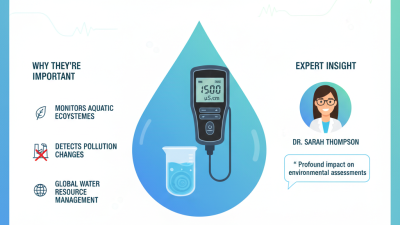
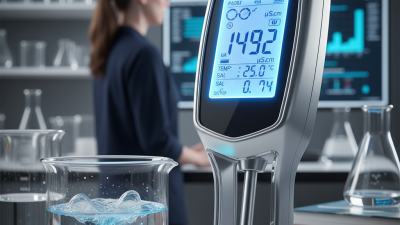
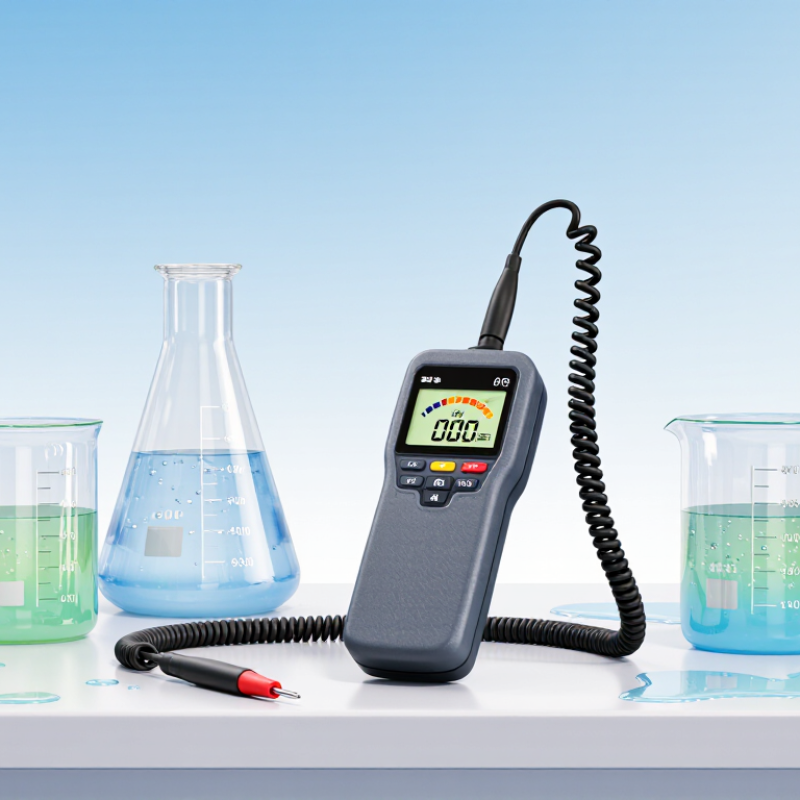
A handheld conductivity meter measures how easily water carries an electrical current. Dissolved ions, such as chloride, sodium, and calcium, create this pathway. The probe applies a small alternating voltage between electrodes. The instrument converts the response into conductance, usually reported as µS/cm or mS/cm. It then applies a cell constant and temperature compensation. Readings are commonly normalized to 25°C.
The USGS National Field Manual reports that many freshwater streams measure roughly 150–500 µS/cm, although geology and pollution can change this range significantly. The U.S. EPA Method 120.1 also recognizes specific conductance as a practical indicator of dissolved ionic material. However, conductivity does not identify each contaminant. A clear reading is not proof of safe water. That distinction is easy to miss. ISO 7888:1985 recommends controlled procedures for measuring electrical conductivity in water, supporting more reliable comparisons across laboratories and field sites.
Tips: Calibrate with a traceable standard near your expected range. Rinse the probe with clean water between samples. Remove air bubbles from the sensor chamber. Record temperature, location, and sample time. Check whether automatic compensation is enabled. A meter can look precise while giving poor data. Dirty electrodes, old standards, and unstable temperatures remain common field problems. For global buyers in 2026, choose a unit with replaceable sensors, readable temperature data, and documented calibration guidance.
Key Features to Compare in the 2026 Global Market
Choosing the best handheld conductivity meter in 2026 requires more than checking the lowest price. Global buyers should compare measurement range, resolution, accuracy, and repeatability under real field conditions. A meter used beside a cooling tower needs different performance from one used in a laboratory. Ask for calibration records, test methods, and uncertainty data. Marketing claims alone are not enough.
Temperature compensation is essential when water changes from morning chill to midday heat. Look for automatic compensation, a replaceable probe, and stable readings after rinsing. An IP-rated housing helps protect the instrument from splashes and dust. Battery life should cover a full workday, while USB-C charging can simplify travel. Data logging, timestamped results, and wireless transfer reduce manual errors. However, wireless features may drain power quickly. That trade-off is easy to overlook.
For international purchasing, check language options, export documentation, warranty terms, and local service access. Measurement units should be clear and adjustable. Compatibility with calibration solutions also matters, especially when supplies differ by region. Independent laboratory verification adds confidence, but buyers should inspect the test date and conditions. Some meters advertise impressive precision that field operators rarely achieve. Real water samples contain temperature shifts, suspended particles, and contamination. A practical trial with your own samples may reveal more than a specification sheet. Look closely at the probe cable, screen visibility, and buttons used with wet gloves. Small design flaws become expensive during daily testing.
How to Choose the Right Meter for Different Applications
2026 Best Handheld Conductivity Meter for Global Buyers
Choosing the right handheld conductivity meter starts with the sample, not the screen. Drinking-water checks need stable readings near low conductivity levels and reliable temperature compensation. The WHO Guidelines for Drinking-water Quality report that total dissolved solids below 600 mg/L are generally acceptable in taste. Above 1,000 mg/L, acceptability often declines. However, conductivity cannot convert to TDS perfectly because dissolved ions vary. A meter with adjustable TDS factors is therefore more practical for international users. ISO 7888 and ASTM D1125 provide recognized methods for measuring electrical conductivity in water.
Tips:
Match the range to the application. Use a low-cell-constant probe for purified water. Choose a wider range for wastewater, aquaculture, or process brines. Check calibration with traceable standards, not tap water. A waterproof housing, replaceable probe, automatic temperature compensation, and readable data logging also matter in wet field conditions.
For laboratory water, resolution and repeatability deserve priority. For cooling systems, fast response and chemical-resistant materials may matter more. Aquaculture operators should examine temperature stability and salinity conversion. The U.S. EPA lists 500 mg/L as a secondary guideline for TDS, but this is not a universal conductivity limit. I have seen users trust automatic conversion too quickly. That is a weakness. Local ion chemistry, calibration temperature, and probe fouling can shift results. Buyers should compare stated accuracy, calibration intervals, operating temperature, and service access before choosing a meter for global work.
Top Performance, Durability, and Connectivity Considerations
For global buyers, a handheld conductivity meter should deliver stable readings across field conditions, not only in a clean laboratory. The WHO/UNICEF Joint Monitoring Programme reported that 2.2 billion people lacked safely managed drinking water in 2022. That gap increases the need for fast water screening in remote sites. Look for automatic temperature compensation, replaceable probes, and a wide measurement range. U.S. EPA Method 120.1 supports conductivity testing across water and wastewater applications.
Performance depends on calibration discipline. A meter should accept traceable conductivity standards and display cell-constant information clearly. A large screen helps when gloves, rain, or poor lighting slow field work. Short response time matters near treatment tanks. Yet faster is not always better. Turbulence, bubbles, and dirty electrodes can create false confidence. I would test repeatability with the same sample several times.
Durability deserves equal attention. An IP-rated enclosure, sealed buttons, and a drop-resistant case reduce repair risk; IEC 60529 defines the testing framework for ingress protection. Connectivity is also becoming practical, not decorative. Bluetooth or USB transfer can preserve timestamps, sample IDs, and calibration records. This supports stronger audit trails and reduces manual transcription errors. Still, wireless range can weaken behind concrete walls. Some buyers may overvalue app features and undervalue battery access. That mistake is easy to make. A dependable meter should remain usable offline, with simple export options and clear data ownership.
Global Buying, Compliance, Calibration, and Maintenance Guide
Global buyers need more than a low purchase price when selecting a handheld conductivity meter in 2026. Measurement range, temperature compensation, probe durability, and display readability affect daily results. Request technical datasheets, calibration certificates, spare-probe details, and battery specifications before ordering. Confirm that the seller provides traceable documents in your working language. Import duties, warranty routes, and delivery conditions also vary by destination.
Compliance requires careful checking. Do not assume one approval covers every market. Review applicable electrical safety, electromagnetic compatibility, battery transport, and environmental requirements with local compliance professionals. An appropriate ingress-protection rating can reduce risks in wet laboratories or outdoor sampling. However, an IP rating does not protect a damaged connector. Inspect the actual instrument before accepting delivery.
Calibration should use fresh, certified conductivity standards near the expected measurement range. Record the standard value, temperature, date, operator, and adjustment result. Rinse the probe with suitable deionized water, then follow the instrument’s drying procedure. Small habits matter. Still, field conditions expose limits. Condensation, damaged cables, and aging sensors can create believable but incorrect readings. That is the uncomfortable part: a clean screen does not prove accuracy. Replace questionable probes, quarantine doubtful results, and document corrective checks. A practical maintenance log should include cleaning intervals, calibration history, unusual readings, and storage conditions.