Top Reasons to Choose an Akron Abrasion Tester for Your Lab?
In today’s manufacturing landscape, the quality of materials is paramount. The Akron Abrasion Tester plays a pivotal role in ensuring that materials can withstand wear and tear. According to a report by the Materials Testing Association, 75% of companies face increased costs due to material failure. This highlights the importance of reliable abrasion testing.
Dr. Emma Collins, a leading expert in material science, states, “Using an Akron Abrasion Tester provides insights that can save companies both time and money.” Laboratories equipped with this tester can measure the abrasion resistance of materials more accurately. This ensures consistent quality and performance in production.
The Akron Abrasion Tester not only enhances testing precision but also promotes a deeper understanding of material behavior under stress. While it is not without its limitations, the benefits strongly outweigh any shortcomings. Choosing the right tool can lead to significant advancements in product development and reliability.
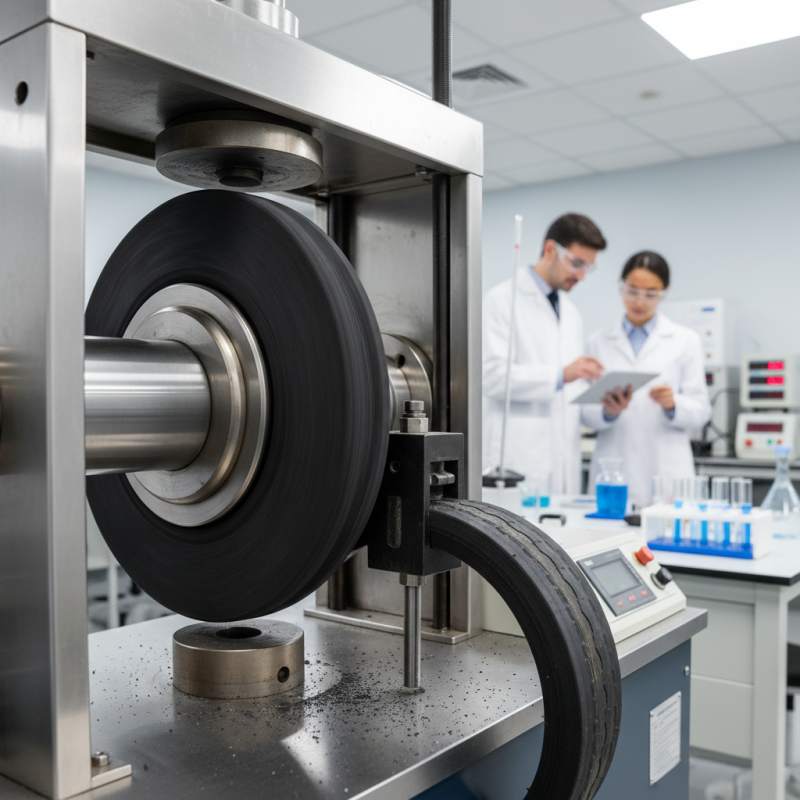
Key Features of the Akron Abrasion Tester for Laboratory Use
The Akron Abrasion Tester is a must-have tool for material evaluation in laboratories. Its key features make it ideal for testing the wear resistance of various materials. This machine calculates the loss of material through abrasion, providing important data for quality control.
One significant feature is its adjustable speed settings. This allows labs to simulate different conditions accurately. The user-friendly interface makes operation easy, even for those new to material testing. Precise measurements can lead to better quality assurance. Additionally, the robust design ensures long-lasting use in any lab environment.
Tip: Regular maintenance is crucial for optimal performance. Calibrate the tester to maintain accuracy over time.
Another notable aspect is its compact size. This permits easy storage without sacrificing functionality. The Akron Abrasion Tester can handle a variety of sample sizes. However, operators should be cautious about sample positioning. Incorrect placement might lead to inconsistent results.
Tip: Keep a log of testing conditions for future reference. This practice can help identify patterns in data over time.
Top Reasons to Choose an Akron Abrasion Tester for Your Lab
| Feature | Description | Benefits |
| Precision Measurement | Allows accurate assessment of material wear under controlled conditions. | Ensures reliable data for quality control and material performance evaluation. |
| User-Friendly Interface | Intuitive controls make operation straightforward for lab personnel. | Reduces training time and increases efficiency in testing procedures. |
| Robust Design | Durable construction suitable for frequent use in a lab setting. | Minimizes maintenance costs and maximizes equipment lifespan. |
| Versatility | Can test a variety of materials and surface finishes. | Broadens application range for different research and industrial needs. |
| Data Logging Capabilities | Integrated systems for real-time data collection and analysis. | Enhances the ability to track performance trends and validate results. |
Benefits of Using the Akron Abrasion Tester in Material Testing
The Akron Abrasion Tester is an essential tool in material testing, particularly for assessing the wear resistance of various materials. According to recent industry reports, about 70% of material failures are linked to abrasion. This underscores the importance of reliable testing. By selecting an Akron Abrasion Tester, labs can ensure a more accurate assessment of material durability under real-world conditions.
One notable benefit of the Akron Abrasion Tester is its precision. It provides consistent and repeatable results, which is critical for material evaluation. A study revealed that labs using high-quality abrasion testing equipment saw a reduction in testing variability by nearly 25%. This improvement allows engineers to make informed decisions about material suitability without second-guessing results.
Moreover, the ease of use of the Akron tester cannot be overlooked. Operators report a learning curve of just a few hours, making it accessible for various staff levels. However, improper setup or calibration can lead to misleading results. This highlights the need for regular training and standard operating procedures to maintain testing integrity. Consistent use of reliable equipment like the Akron Abrasion Tester can greatly enhance the quality control processes in laboratories.
How the Akron Abrasion Tester Compares to Other Testing Methods
When it comes to abrasion testing, the Akron Abrasion Tester stands out among various testing methods. This device simulates real-world wear and tear, providing accurate results. It helps researchers assess material durability and performance under abrasive conditions. Many methods may lack consistency or reproducibility, but the Akron provides a structured testing environment.
Compared to traditional methods, the Akron tester offers better control over variables. Its design allows for precise measurements of friction and wear. Testing materials can be swapped quickly, enhancing workflow efficiency. Some methods require lengthy preparations or have limited testing parameters, which can lead to uncertainty in results.
While the Akron device has clear advantages, limitations exist. It may not accommodate all material types equally well. Researchers must remain mindful of the specific conditions used during tests. Understanding these nuances is crucial for interpreting results accurately. Ultimately, the Akron Abrasion Tester offers a balance of reliability and detail in abrasion testing.
Applications of the Akron Abrasion Tester Across Different Industries
The Akron Abrasion Tester has carved a niche across various industries. Its primary role is to evaluate material wear resistance. This capability is crucial in sectors like automotive, aerospace, and textiles. Each industry demands unique performance standards for materials. For instance, automotive manufacturers need durable coatings that resist scratching and wear. Here, the Akron Tester provides invaluable insights into material longevity.
In the textile industry, the tester helps assess fabric durability. Fabrics must withstand daily use and maintain their appearance over time. This is especially important for activewear and upholstery. The accurate assessment offered by the Akron device ensures that manufacturers can meet consumer expectations.
Despite its robust design and functionality, challenges do exist. Not every material type can be tested effectively. Some softer materials may yield inconsistent results. This inconsistency can lead to misconceptions about their performance. Users must understand these limitations to make informed choices. Awareness of such nuances ultimately enhances testing accuracy and reliability.
Cost-Effectiveness and Durability of the Akron Abrasion Tester
When considering lab equipment, the Akron Abrasion Tester stands out for its cost-effectiveness and durability. This tool provides reliable abrasion testing while minimizing financial strain. Many laboratories face budget constraints. An efficient, affordable solution is critical. The Akron Abrasion Tester delivers accurate results without sacrificing quality.
Durability is another key feature of this tester. Built with robust materials, it withstands heavy use. Frequent testing does not lead to wear and tear as quickly as with less durable models. This longevity reduces the need for replacements, saving additional costs in the long run. Many labs have benefitted from this reliable performance, making it an attractive choice for researchers.
However, users should consider the specific needs of their applications. Not every lab may require the same features. It's essential to assess whether the Akron Abrasion Tester aligns with testing requirements. Understanding your lab’s testing goals ensures you select the most appropriate equipment. This thoughtful approach enhances the overall quality of your research while keeping it budget-friendly.
Cost-Effectiveness and Durability of the Akron Abrasion Tester
This chart illustrates the cost-effectiveness and durability of abrasion testers based on various factors such as initial cost, maintenance cost, and lifespan. The data reflects typical values based on industry standards.