How to Choose a Portable TDS Meter?

Choosing a tds meter portable device sounds simple until the numbers begin to disagree. A kitchen tap may show 180 ppm, while filtered water drops below 30 ppm. That difference is useful, but it is not the whole story.

Water-quality engineer and author Dr. Michael J. McGuire states, “TDS is not a measure of health.” His point matters when comparing portable meters. Total dissolved solids describe the conductivity of dissolved minerals, salts, and other charged substances. They do not identify each substance separately. A low reading cannot prove that water is safe. A high reading does not automatically prove contamination.

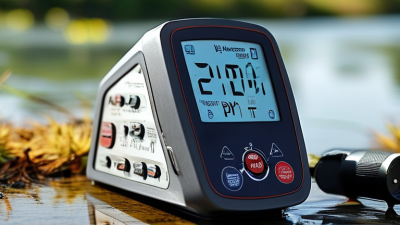
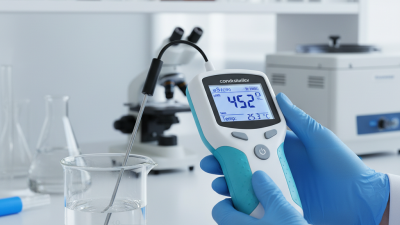
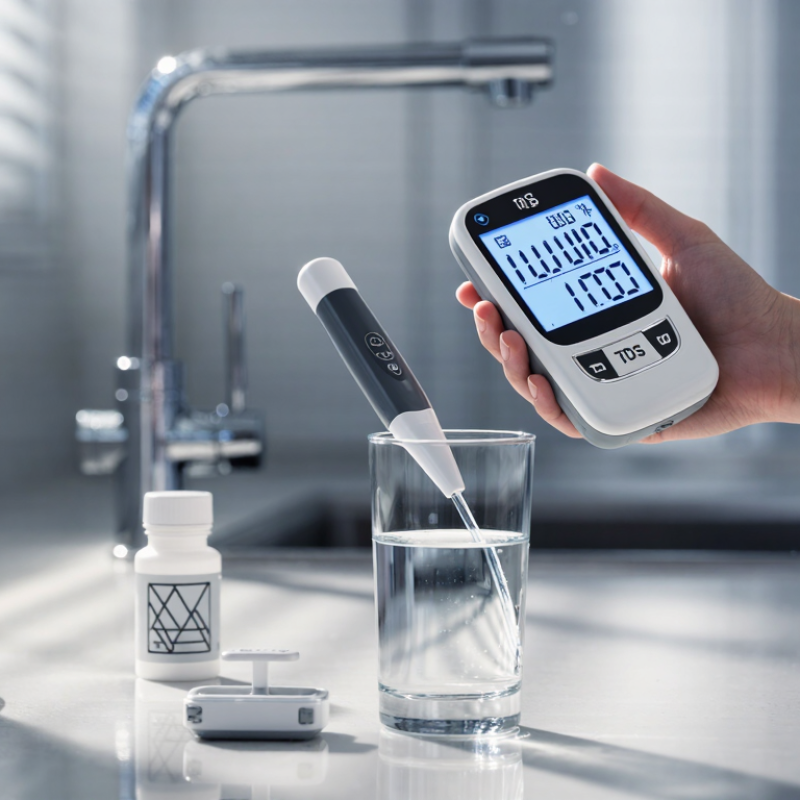
Look beyond the displayed number. A dependable tds meter portable should offer automatic temperature compensation, stable calibration, a clear screen, and replaceable batteries. Waterproof construction helps when testing a glass beside a sink. A protective cap matters too. Small details become frustrating during daily use.

Calibration is often overlooked. Use a suitable calibration solution, follow the manufacturer’s instructions, and test the meter regularly. Store the probe clean and dry, unless the instructions require another method. Avoid touching the sensor with wet fingers. It can distort a quick reading.

Portability has limits.

Consider the meter’s accuracy range, measurement resolution, and warranty before buying. Some inexpensive models look impressive but drift after repeated use. I have also seen users treat one reading as a final verdict. That is a mistake worth admitting. Use the meter for comparison and monitoring, then seek laboratory testing when results seem unusual or important decisions depend on them.
How to Choose a Portable TDS Meter?

Define TDS and the 0.5–0.7 Conductivity Conversion Factor

Total dissolved solids (TDS) represent dissolved minerals, salts, and other charged substances in water. A portable meter usually does not measure TDS directly. It measures electrical conductivity (EC), then estimates TDS through a conversion factor.

The common equation is TDS (mg/L) ≈ EC (µS/cm) × conversion factor. That factor commonly ranges from 0.5 to 0.7.

Why the spread? Different ions conduct electricity differently. The USGS National Field Manual explains that conductivity-to-solids relationships depend on water chemistry. Therefore, a 600 µS/cm reading may indicate roughly 300–420 mg/L, not one exact value. The estimate is conditional.

For context, the US Environmental Protection Agency lists 500 mg/L as a secondary drinking-water standard for TDS. This guideline mainly concerns taste, deposits, and appearance. It is not a universal health threshold.

When choosing a portable TDS meter, check whether the conversion factor can be adjusted. Temperature compensation is also important because conductivity changes with temperature.

Use fresh calibration solutions and record EC, temperature, and the selected factor.

Standard Methods for the Examination of Water and Wastewater treats conductivity and residue measurements as separate tests. That distinction matters. I would not treat the displayed ppm as laboratory truth.

A convenient shortcut can still mislead. Compare important readings with laboratory analysis when water quality decisions carry real consequences.
Match the Meter’s Range and Resolution to Readings up to 9,999 ppm

A portable TDS meter should match the water you expect to test. For readings up to 9,999 ppm, choose a meter with a range that reaches at least 10,000 ppm. A narrow 0–999 ppm model may display an error or hide important differences in concentrated water.

Resolution matters too. A meter showing 1 ppm steps can reveal small changes, while 10 ppm steps may be adequate for rough process checks. The United States Environmental Protection Agency lists 500 mg/L as a secondary standard for drinking-water TDS. The World Health Organization reports that water below 300 mg/L generally has excellent palatability, while levels above 1,200 mg/L are usually unacceptable. These figures make resolution meaningful near common thresholds.

Read the specifications carefully. “Accuracy” and “resolution” are not interchangeable. A display may show 1 ppm, yet the actual accuracy can vary by several percent. TDS is also estimated from electrical conductivity, using a conversion factor. APHA’s Standard Methods notes that this relationship depends on dissolved substances and water chemistry. Calibration with a suitable standard is essential. Keep the probe clean and rinse it between samples. I once treated a stable reading as proof of accuracy; it was probably residue on the sensor. Check twice. A practical meter for high-range work should offer clear units, temperature compensation, and a stated accuracy across the full range—not only near zero.

How to Choose a Portable TDS Meter? - Match the Meter’s Range and Resolution to Readings up to 9,999 ppm

Measurement Range Suggested Resolution Typical Water Reading Suitable Applications Selection Guidance
0–99 ppm 1 ppm Distilled or deionized water: often below 10 ppm when properly prepared Low-mineral water checks, laboratory-prepared water, final rinse monitoring Choose only when readings are consistently low and small changes matter.
0–999 ppm 1 ppm Drinking water commonly ranges from tens to several hundred ppm, depending on the source and treatment Household water testing, reverse-osmosis checks, aquarium and hydroponic monitoring A practical choice when expected values remain below 1,000 ppm and one-ppm increments are useful.
0–1,999 ppm 1–10 ppm Concentrated nutrient solutions and moderately mineralized water may fall within this range Hydroponics, irrigation water, process-water screening Use a meter with a clearly specified resolution near the values you need to compare.
0–4,999 ppm 1–10 ppm High-mineral water and stronger nutrient solutions can reach several thousand ppm Agricultural water checks, nutrient mixing, industrial pre-screening Select this range if readings may exceed 1,000 ppm but should remain below 5,000 ppm.
0–9,999 ppm 1 ppm at low values; 10 ppm may be acceptable at high values Very concentrated nutrient solutions, brackish or highly mineralized water Wide-range field screening, agricultural applications, process-water checks The safest option when the expected value is unknown or may approach 9,999 ppm.
Above 9,999 ppm Defined by the instrument; verify conductivity limits Saline water and concentrated industrial solutions may exceed 10,000 ppm Brine, wastewater, industrial process monitoring Use a higher-range conductivity instrument if the display may overflow or accuracy is critical.
Important measurement notes:
  • TDS is normally estimated from electrical conductivity (EC), not measured directly. The displayed value depends on the selected conversion factor.
  • Different meters can show different ppm values for the same sample when they use different TDS conversion factors, commonly around 0.5 or 0.7.
  • Temperature compensation improves comparability because water conductivity changes with temperature. Check whether the meter uses automatic or manual compensation.
  • Resolution is not the same as accuracy. A display showing 1 ppm does not guarantee an accuracy of ±1 ppm.
  • For reliable comparisons, calibrate the meter with a suitable conductivity standard, rinse the probe, remove air bubbles, and wait for the reading to stabilize.
Quick rule: Choose a range that covers the highest expected reading, then select the finest practical resolution for the decisions you need to make.

Interpret Results Against the EPA’s 500 mg/L Secondary Standard

How to Choose a Portable TDS Meter?

A portable TDS meter can help you compare dissolved mineral levels quickly. Choose one with automatic temperature compensation, clear units, and a replaceable probe. Calibration matters more than a bright screen. Use a certified calibration solution and follow the manufacturer’s procedure. Rinse the probe with clean water, then gently shake off droplets. Avoid touching the sensor with your fingers.

The EPA’s secondary standard for total dissolved solids is 500 mg/L. This is a non-enforceable guideline for taste, deposits, staining, and other aesthetic concerns. It is not a complete safety limit. A reading below 500 mg/L does not prove that water is free from bacteria, lead, pesticides, or other contaminants. TDS meters cannot identify individual substances.

Readings near 500 mg/L deserve careful interpretation. For example, a meter showing 480 mg/L may later display 530 mg/L after temperature changes or poor calibration. The number is an estimate, not a laboratory result. Different meters may use different conductivity conversion factors, so results can disagree. That is frustrating, but real. Record the date, temperature, source, and meter reading each time. If levels rise suddenly, confirm the result with a properly collected laboratory sample. A glass of water may look clear and still require testing.

How to Choose a Portable TDS Meter? — Interpret Results Against the EPA’s 500 mg/L Secondary Standard

Total dissolved solids (TDS) are reported in milligrams per liter (mg/L), approximately equivalent to parts per million (ppm) in water. Choose a meter that covers at least 0–500 mg/L, provides clear resolution near the standard, and can measure higher levels when needed.

How to read it: The EPA’s secondary drinking-water standard for TDS is 500 mg/L. This is a non-enforceable aesthetic guideline related mainly to taste, deposits, and scaling—not a direct health-based limit. The sample values shown are approximate reference values; actual readings vary with source, treatment, season, and meter calibration.

Compare ±2% Accuracy, Automatic Temperature Compensation, and Calibration

How to Choose a Portable TDS Meter?

A portable TDS meter should offer more than a large screen and a low price. Check the stated accuracy carefully. A ±2% specification means a 500 ppm reading may vary by about 10 ppm under suitable conditions. It does not guarantee laboratory-level accuracy. TDS is usually estimated from electrical conductivity, using a conversion factor. Different water mixtures can produce different results at the same conductivity. That limitation matters.

Look for automatic temperature compensation, especially when testing water outdoors or from changing sources. Conductivity can shift by roughly 2% per °C for many water types. ATC adjusts the reading toward a reference temperature, often 25°C. It cannot correct a dirty probe, trapped air, or an unsuitable conversion factor. Small details matter. Let the probe reach the sample temperature, stir gently, and wait for the number to stabilize.

Calibration is equally important. Use a certified calibration solution with a known conductivity value, not tap water or guesswork. Rinse the sensor, remove excess droplets, and calibrate according to the meter’s instructions. Frequent testing may require weekly checks, while occasional home use may need less. I once trusted a stable reading without checking calibration; that assumption was too neat. Recalibrate after long storage, sensor cleaning, or unexpected readings. A clear calibration process is often more valuable than an impressive accuracy claim.

Prioritize IP67 Protection, Replaceable Probes, and 1413 µS/cm Standards

How to Choose a Portable TDS Meter?

Prioritize IP67 Protection, Replaceable Probes, and 1413 µS/cm Standards

When checking water in the field, I prefer a portable TDS meter with genuine IP67 protection. It should resist dust and survive temporary immersion. However, IP67 does not protect against high-pressure spray, hot water, or every chemical. That detail is easy to overlook. Inspect the sealing ring and battery cover before each trip. A loose cover can quietly ruin a reliable measurement.

A replaceable probe also matters during regular testing. The sensing surface collects mineral residue, especially in hard water. Rinse it with clean water after use, then dry it gently. If readings become slow or unstable, replacing the probe may cost less than replacing the entire meter. Check whether the replacement process requires tools. Some designs look convenient but feel awkward in wet hands.

Calibration deserves equal attention. A 1413 µS/cm conductivity standard is widely used for routine calibration near room temperature. Use a fresh solution in a clean cup, and avoid pouring it back into the bottle. Temperature compensation helps, but it cannot correct a dirty sensor or poor technique. Record the temperature and calibration date. I once trusted a stable display for too long. The numbers looked convincing, yet the probe had been drifting for weeks. A meter is only as dependable as its maintenance.