What is the best hach conductivity meter for accurate readings?
Choosing the right Hach conductivity meter is crucial for anyone in laboratory settings or fieldwork. Accurate readings can affect decision-making and data analysis significantly. These meters measure the electrical conductivity of liquids, providing insights into water quality metrics. A precise Hach conductivity meter can be essential in various industries, including environmental monitoring and chemical manufacturing.
High-quality conductivity meters are designed with advanced technology. They offer features like automatic temperature compensation and multiple measurement ranges. Some models even provide built-in data logging capabilities. This innovation helps users maintain accuracy across different conditions. Each meter may operate slightly differently, which is a point of consideration. Users must understand their specific needs before making a choice.
However, with so many options, finding the best Hach conductivity meter can be daunting. Some users may struggle to identify the right specifications for their applications. Reliability and technical support are also key factors. The right meter can enhance operational efficiency, but the wrong choice may lead to misleading results. Making an informed decision requires careful evaluation of each meter's features and performance.
Importance of Accurate Readings in Conductivity Measurement
Accurate readings in conductivity measurement are crucial for various applications. In laboratories, discrepancies can lead to faulty results. For instance, when measuring water quality, a slight error in conductivity can indicate contamination or misinterpretation of data. Precision is not just a preference; it is a necessity. Reliable meters ensure that scientists can trust their results, impacting research validity.
Choosing the right conductivity meter involves understanding your specific needs. Some environments demand greater sensitivity or a broader range. For accurate readings, look for meters with good temperature compensation. Variations in temperature can skew results, making this feature essential. Low-quality devices may offer convenience but can lead to frequent recalibration and frustration.
One practical suggestion is to regularly verify your meter's calibration. This simple step can save you from receiving inaccurate data. Keep your device clean and stored properly. Detailing maintenance reduces the chance of accumulating residues that could alter readings. Always cross-check results with another method when feasible. This extra layer of scrutiny can highlight inconsistencies and guide you in re-evaluating your measurements.
What is the best hach conductivity meter for accurate readings? - Importance of Accurate Readings in Conductivity Measurement
| Model |
Measurement Range (µS/cm) |
Accuracy (% Full Scale) |
Temperature Compensation |
Features |
| Model A |
0 - 200000 |
±1% |
Automatic |
Data logging, Bluetooth connectivity |
| Model B |
0 - 100000 |
±2% |
Manual |
Large display, rechargeable battery |
| Model C |
0 - 5000 |
±0.5% |
Automatic |
Compact design, USB connectivity |
| Model D |
0 - 50000 |
±1.5% |
Automatic |
IP67 waterproof, backlight display |
Key Features of Top Hach Conductivity Meters
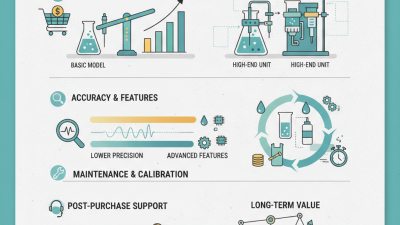
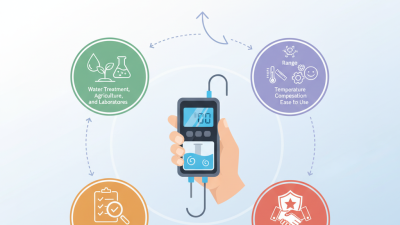
When selecting a conductivity meter, certain features stand out as essential for accurate readings. Look for meters that offer automatic temperature compensation. This feature adjusts readings based on temperature variations, which is crucial for precise measurements in varying environments. Additionally, high accuracy specifications are vital, often represented as a percentage error. A reliable meter should maintain this accuracy across a wide range of conductivity levels.
Another important aspect is the ease of use. An intuitive interface with clear display readings enhances user experience significantly. Meters that offer data logging capabilities allow users to track changes over time easily. Waterproof designs also increase durability, making them suitable for fieldwork. However, the user must ensure they maintain and calibrate the device regularly, as neglecting this can lead to misleading results.
Design considerations should not be overlooked. Meters that are lightweight and portable grant versatility in usage scenarios. However, be cautious; more features might complicate the operation for inexperienced users. A meter packed with advanced functions could overwhelm those who need straightforward readings. Seeking a balance between advanced features and user-friendliness is key for anyone in need of reliable conductivity measurements.
Comparative Analysis of Hach Conductivity Meter Models
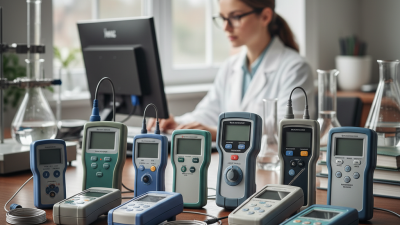
In the realm of water quality analysis, accurately measuring conductivity is crucial. Several Hach conductivity meter models dominate the market, each with distinct features. Understanding their differences is vital for selecting the right one for your needs. Recent industry reports indicate that optimal conductivity meters should provide readings within ±1% of the actual value for reliable data.
Field studies show that compact models are often preferred for their ease of use and portability. Their design allows for quick readings in various environments. However, these meters sometimes sacrifice precision for convenience, raising questions about their reliability in critical applications. Users should consider the trade-off between accuracy and portability when choosing a model.
For best practices, ensure regular calibration of any conductivity meter. A well-calibrated meter improves data integrity significantly. Furthermore, ambient temperature can affect readings. Keeping meters in a controlled environment may yield more consistent results. Regular maintenance checks also ensure longevity and functionality. Understanding these factors is key to achieving reliable conductivity measurements.
Industry Standards for Hach Conductivity Measurement Accuracy
When considering the accuracy of conductivity measurement in laboratories, adherence to industry standards is crucial. The American Society for Testing and Materials (ASTM) and the International Organization for Standardization (ISO) provide guidelines for testing procedures. These standards emphasize the importance of calibration and use of high-purity water for accurate readings. A report by the National Institute of Standards and Technology estimates that deviations from standard calibration can lead to errors of ±2%.
Conductivity meters require careful examination and regular maintenance to meet accuracy standards. Regular calibration against known standards is essential. In many industries, even small deviations can result in significant operational implications. Research indicates that factors such as temperature fluctuations and electrode wear can affect performance. A study revealed that up to 15% of conductivity meters in the field show inaccuracies due to environmental conditions.
The choice of a conductivity meter should reflect its ability to meet these rigorous standards. Look for meters that provide clear data on calibration intervals and measurement ranges. Knowledge of these specifications is key to selecting the right tool. Some devices lack detailed documentation, leading to potential misinterpretations of results. Always consider whether the device offers traceable measurements that comply with relevant industry standards for maximum reliability.
User Feedback and Performance Reviews of Hach Conductivity Meters
When it comes to choosing the best conductivity meter, user feedback plays a vital role. Many users recommend devices that offer consistent and accurate readings. Reliable results are essential for various applications, and this reliability often comes from extensive testing. Users appreciate meters that are user-friendly, allowing for quick setup and operation.
Performance reviews highlight the importance of calibration. A well-calibrated meter ensures that readings are precise. Some users noticed significant discrepancies without regular calibration. This reflects a common oversight when using these devices. Accuracy in measurements can dramatically impact results, so it's crucial not to neglect this step.
For those new to conductivity meters, practical advice can enhance your experience. Before purchase, read feedback from current users. Their insights can guide you toward a more informed decision. Additionally, consider testing a meter before committing. This hands-on approach helps identify potential shortcomings early on. Lastly, remember that environmental factors can influence readings, so it's wise to account for these variables.